2026-11-09 · Dan Ramirez
Preventing Frozen Pipe Damage During Colorado Springs Winters
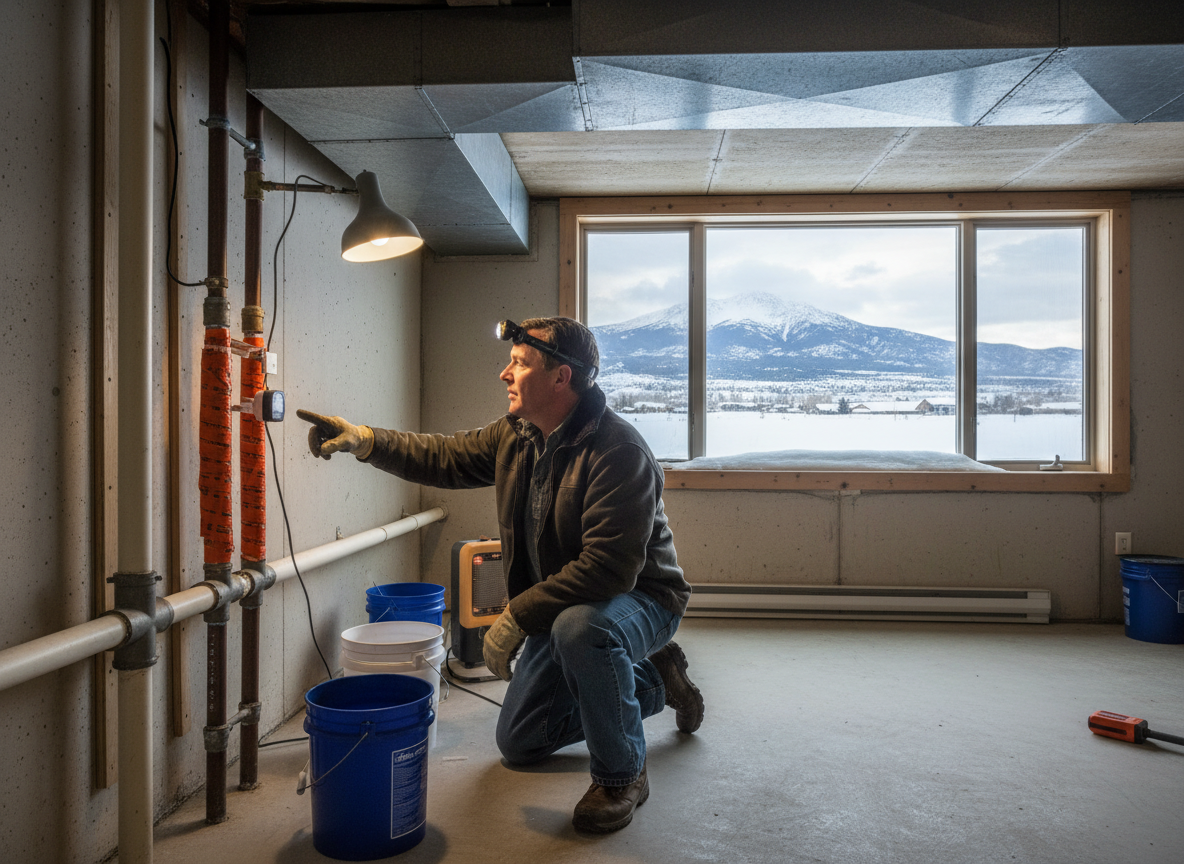
Insulating pipes and keeping indoor temperatures above 55°F prevents the majority of frozen pipe incidents during Colorado Springs winters when overnight lows often dip below 20°F in the semi-arid high-plains climate.
Winter Climate Realities in El Paso County
Colorado Springs sits in a semi-arid high-plains zone where cold air sinks into valleys and neighborhoods such as Manitou Springs and Broadmoor. Older homes in Old Colorado City often feature crawl spaces and exterior walls with minimal insulation, allowing pipes to lose heat faster than in newer Briargate construction. Pikes Peak and Cheyenne Mountain create microclimates that pull colder air down into the city, extending freeze periods into late March. These conditions differ from nearby Fountain or Security-Widefield where slightly lower elevations sometimes moderate overnight lows. Homeowners must account for rapid temperature drops after sunset rather than relying on daytime highs that can reach 40°F.
Vulnerable Pipe Locations in Local Housing Stock
Exposed supply lines in unheated garages and crawl spaces appear frequently in 1950s-1970s homes throughout Rockrimmon and the Broadmoor area. Slab-on-grade foundations common near the United States Air Force Academy leave under-slab pipes susceptible when soil temperatures drop. Attic pipes serving second-floor bathrooms in two-story houses in Briargate also freeze when attic insulation settles over time. The terrain around Garden of the Gods and Cheyenne Mountain funnels wind that strips heat from exterior walls faster than sheltered lots. Checking these locations each fall before the first hard freeze reduces emergency calls once temperatures fall below 15°F for multiple nights.
Practical Insulation and Heat Strategies
Wrap exposed pipes with foam sleeves rated for at least R-3 in areas like laundry rooms and utility closets. Install heat tape on supply lines running along north-facing walls in Old Colorado City homes where sun exposure stays limited during short winter days. Leave cabinet doors open under sinks to allow warm air circulation around pipes during cold snaps. Maintain a consistent 58-62°F thermostat setting overnight rather than dropping lower, especially in larger homes in the Rockrimmon area. These steps address the rapid heat loss typical when dry high-plains air combines with wind gusts over 20 mph.
Early Detection and Response Steps
Watch for reduced water flow from faucets after a cold night as the first indicator of ice forming inside pipes. Listen for cracking or popping sounds in walls near exterior lines in Manitou Springs properties. If flow stops completely, avoid using the fixture and shut off the main valve to limit pressure on the frozen section. Thaw pipes gradually with a hair dryer or heat lamp rather than open flame to prevent steam bursts. Persistent issues after thawing often require water damage repair to address hidden leaks behind walls.
When Professional Assessment Becomes Necessary
Persistent low pressure after thawing or visible moisture near baseboards signals the need for assessment by technicians familiar with El Paso County construction. Homes near the Olympic Training Center or in Cimarron Hills sometimes experience secondary damage when ice expands and cracks older galvanized lines. Review the cost factors for water damage restoration in Colorado Springs to understand variables such as access difficulty in crawl spaces versus slab leaks. Technicians at 5745 Industrial Pl, Colorado Springs, CO 80916 can evaluate during business hours Monday through Friday 8am–6pm or Saturday 9am–2pm.